⚡ Fleet Electrification & Cost Reduction Solutions
Cost Reduction & Maintenance Optimization in Commercial EV Fleets !
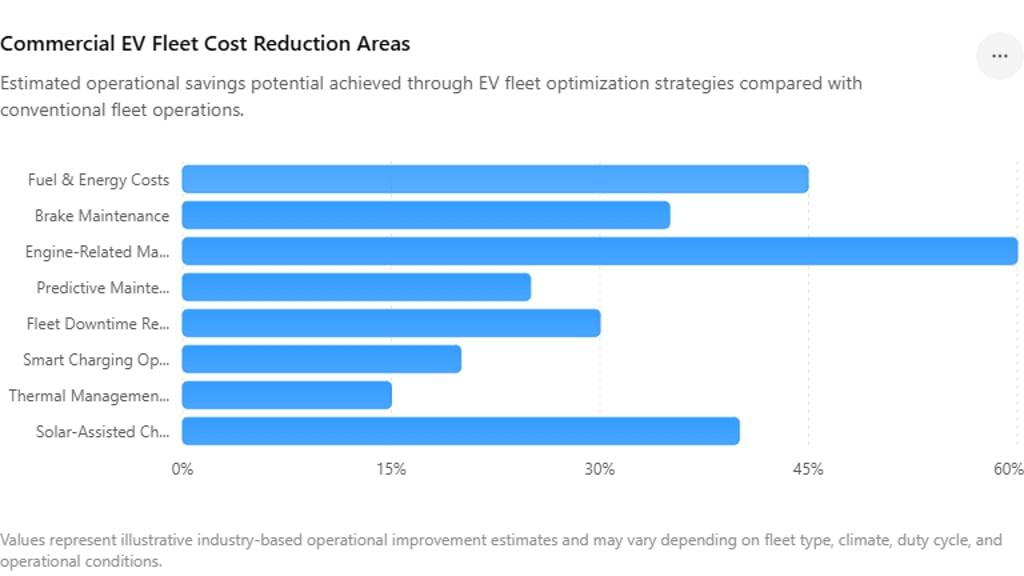
One of the biggest reasons organizations are adopting electric commercial vehicles is the potential for: Lower operating costs, Reduced fuel dependency, Improved energy efficiency, Simplified drivetrain systems and Long-term sustainability benefits. However, achieving real financial savings in commercial EV operations is not automatic. Many fleet operators initially assume that electric vehicles are: “maintenance free” or “low-cost by default.” In reality, successful EV fleet economics depend heavily on: Proper maintenance planning, Energy optimization, Smart charging management, Driver behavior, Thermal management and Predictive diagnostics. The fleets that achieve the greatest operational savings are usually the ones that optimize: Both energy management and maintenance strategy simultaneously. "Why EV Fleet Optimization Matters" Commercial EV fleets operate under demanding conditions including: High daily mileage, Continuous duty cycles, Heavy passenger or cargo loads, Stop-and-go urban traffic and Harsh environmental exposure. Under these conditions, even small inefficiencies can significantly affect: Energy consumption, Battery lifespan, Vehicle availability, Maintenance costs and Operational profitability. Fleet optimization is therefore becoming one of the most important areas in commercial electric mobility. 1. Predictive Maintenance Reduces Downtime: Traditional vehicle maintenance often follows: The Reactive Maintenance or fewer scheduled maintenance activities, where most of the repairs are performed after failures occurs. Commercial EV fleets are increasingly shifting toward: Predictive Maintenance, using: Real-time diagnostics, AI-based monitoring, Remote telematics, H.V Battery analytics and Thermal monitoring systems Predictive maintenance helps identify: Early component degradation, Abnormal temperatures, Bearings and other critical assemblies wear, Cooling system issues, Battery imbalance and Electronic instability, before major failures occur. This significantly reduces: Unplanned downtime, Emergency repairs, Fleet disruption and Expensive component failures. "The Financial Impact of Downtime" For commercial fleets, downtime directly affects: Revenue generation, Route reliability, Fleet utilization and Customer service performance. Even a single out-of-service vehicle may create: Scheduling disruptions, Operational delays and Backup fleet requirements. Reducing downtime is therefore one of the most effective cost-saving strategies in fleet management. 2. Battery Health Optimization Extends Lifecycle: The battery packs are typically the most expensive components in an electric vehicle. Improving battery lifespan has a major impact on: Total Cost of Ownership (TCO), Battery degradation is strongly influenced by: Charging behavior, Operating temperature, Fast charging frequency, Depth of discharge and Driving patterns, Fleet operators can improve battery longevity by optimizing: Charging schedules, Thermal management system, Energy utilization and Route planning. Battery aging can be accelerated under: High ambient temperatures, Aggressive fast charging and Continuous high-load operations, Proper battery management may significantly reduce long-term replacement costs. "Fast Charging vs Battery Longevity" While fast charging improves operational flexibility, excessive high-power charging can increase thermal stress. Battery heating during charging can be approximated by: Q=I*2*R where: Q = heat generation I = charging current R = internal resistance. Higher charging current therefore increases heat generation. Smart charging strategies help balance: Charging speed, Battery health and Operational efficiency. 3. Smart Energy Management Reduces Charging Costs: Electricity pricing often varies throughout the day. Commercial fleets can reduce energy costs through: "Smart Charging Optimization" This includes: Off-peak charging, Load balancing, Solar-assisted charging, Battery energy storage integration and AI-based charging scheduling. Smart charging systems can automatically prioritize: Lower electricity tariff periods, Renewable energy availability and Depot charging efficiency. This can significantly reduce long-term operating expenses. 4. Regenerative Braking Reduces Brake Wear: One major maintenance advantage of EVs is: "Regenerative Braking" During deceleration, electric motors help slow the vehicle while recovering energy. This reduces dependency on: Conventional brake pads, Mechanical braking systems, Friction braking components, As a result: Brake wear decreases, Maintenance intervals may increase and Component lifespan improves. For urban commercial fleets with heavy stop-and-go operations, regenerative braking can create substantial maintenance savings. 5. Thermal Management Optimization Improves Reliability: Temperature management is becoming one of the most critical factors in commercial EV operations. Overheating can affect: Battery lifespan, Electronics reliability, Motor efficiency and Charging performance. Fleet operators increasingly focus on: Cooling system inspections, Coolant maintenance, Electronics ventilation, cleaning and BTMS diagnostics. Effective thermal management reduces: System failures, Battery degradation, Thermal shutdown events and Component stress. This becomes especially important in: Hot climate regions, Mining operations and Heavy-duty transport applications. 6. Driver Behavior Directly Affects Operating Costs: Driver operating behavior significantly influences: Energy efficiency, Battery stress, Tire wear, Drivetrain loading and Regenerative braking effectiveness. Aggressive driving patterns may increase: Energy consumption, Mechanical stress and Thermal loading. Fleet operators increasingly use: Driver analytics systems, Energy efficiency scoring, Route optimization software and AI-assisted fleet monitoring, to improve operational efficiency. 7. Fleet Data Analytics Improves Decision Making: Modern EV fleets generate enormous amounts of operational data. This includes: Battery temperature, Energy consumption, Charging cycles, Fault history, Route efficiency and Component health. Data analytics allows fleet operators to: Identify inefficiencies, Optimize maintenance schedules, Predict failures, Improve energy usage and Reduce operational waste, In the future, data-driven fleet management may become one of the biggest competitive advantages in commercial transportation. 8. Solar-Assisted Charging Depots Reduce Energy Dependency: Many fleet operators are now exploring: Solar-Integrated Charging Infrastructure, Combining: Solar energy, Battery storage systems and Smart charging can significantly reduce: Electricity expenses, Grid dependency and Operational energy risk. This is particularly valuable for: Bus depots, Industrial fleets, Logistics centers and Remote operations. Energy-independent fleet ecosystems may become increasingly important as electricity demand rises globally. "The Shift From Mechanical Maintenance to System Optimization" Traditional diesel fleet maintenance focused heavily on: Engines, Fuel systems, Lubrication and Transmission servicing. EV fleets shift maintenance focus toward: Batteries, Electronics, Thermal systems, Software diagnostics and Energy optimization. The future of fleet maintenance is becoming increasingly: Data-driven and energy-focused. "Final Thoughts" Commercial EV fleets offer enormous potential for: Cost reduction, Energy savings, Operational efficiency and Sustainable transportation. However, achieving maximum economic benefit requires more than simply replacing diesel vehicles with electric ones. Long-term fleet success depends on: Smart maintenance planning, Battery health optimization, Predictive diagnostics, Intelligent charging management, Thermal system reliability and Data-driven operational strategies. The future of commercial fleet management is no longer only about maintaining vehicles, it is about optimizing the entire energy and mobility ecosystem around them. “The following comparison illustrates some of the major operational cost reduction opportunities achievable through optimized commercial EV fleet management.”
Connect
Get in touch for sustainable transport solutions.
Head of Operations (Australia): Mr. Tauqeer Banoori
© 2025. All rights reserved.
Contact: +61 415 605 202