⚡ Fleet Electrification & Cost Reduction Solutions
EV Fleet Procurement: Key Technical Factors Buyers Should Evaluate
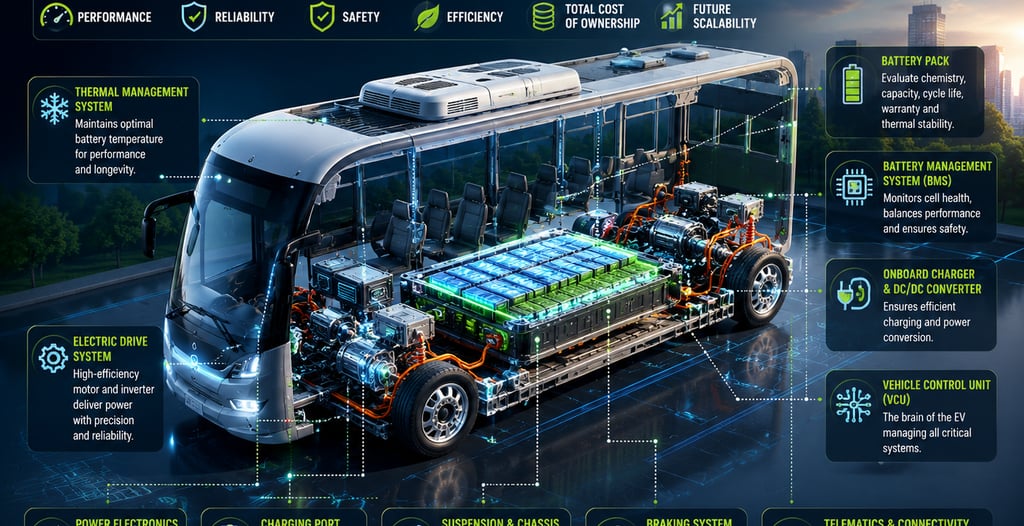
"Electric mobility continues to expand globally, more fleet operators are considering the transition from conventional diesel vehicles to electric fleets. However, successful fleet electrification begins long before the vehicle enters service. It begins with: Smart Procurement Decisions; Many organizations focus primarily on: Vehicle purchase price, Driving range and Manufacturer reputation. While these factors are important, commercial EV procurement requires a much deeper technical evaluation. Selecting the wrong vehicle platform can lead to: Increased operating costs, Reliability issues, Reduced fleet availability, Higher maintenance expenses and Lower return on investment (ROI), To maximize long-term fleet performance, buyers must evaluate the entire vehicle ecosystem rather than simply comparing specifications on paper. "Why EV Procurement Is Different from Conventional Vehicles" Traditionally, fleet procurement focused on: Engine performance, Fuel efficiency, Transmission reliability and Spare parts availability. Electric vehicles introduce additional considerations such as: Battery technology, Thermal management systems, Charging compatibility, Software architecture and High-voltage safety systems. As a result, procurement teams increasingly require both: Fleet management expertise and Technical EV knowledge, to make informed decisions. 1. Battery Technology Should Be Evaluated Carefully; The battery is the most expensive component of an electric vehicle. Buyers should evaluate: Battery Chemistry, Common battery chemistries include: LFP (Lithium Iron Phosphate), Advantages: Higher safety, Longer cycle life, Better thermal stability and Lower cost. Particularly suitable for: Electric buses, Commercial fleets and High-temperature environments. "NMC (Nickel Manganese Cobalt)" Advantages: Higher energy density, Longer driving range and Reduced vehicle weight, Often preferred for: Premium EVs and Long-range applications. The choice should align with operational requirements rather than marketing claims. 2. Battery Thermal Management System (BTMS); One of the most overlooked procurement factors is: Battery Thermal Management System (BTMS), The BTMS regulates battery temperature during: Charging, Discharging, High-load operation and Extreme weather conditions, An effective BTMS helps: Improve battery life, Prevent overheating, Reduce thermal stress and Improve operational reliability. For operators in hot climates, BTMS performance can be more important than advertised vehicle range. 3. Evaluate Real-World Range, Not Advertised Range; Manufacturers typically publish range figures obtained under controlled testing conditions. Actual range may vary depending on: Passenger load, Cargo weight, Driving style, Terrain, Weather conditions and HVAC usage. Fleet operators should request: Real-world operating data, Demonstration vehicles, Independent performance testing, before making purchasing decisions. 4. Charging Compatibility; Charging infrastructure compatibility is critical. Buyers should verify: Charging Standards, Examples include: CCS, GB/T, CHAdeMO. The selected vehicle must align with available charging infrastructure. Failure to consider charging compatibility can create expensive operational challenges later. 5. Charging Time and Operational Suitability- Fleet operations vary significantly. Some fleets can charge overnight, Others require: Opportunity charging, Fast charging and High utilization schedules, Procurement teams should evaluate: Battery size, Charging power limits, Charging duration and Route requirements. The best battery is not always the largest battery. 6. High-Voltage Safety Systems- Commercial EVs operate with high-voltage systems that may exceed: 600–800 Volts, Procurement teams should assess: Isolation monitoring systems, Emergency shutdown systems, Fire protection measures and Battery protection architecture. Safety engineering should be a primary evaluation criterion. 7. Vehicle Electronics Architecture- Modern EVs are heavily dependent on electronics, Critical systems include: Battery Management Systems (BMS), Motor controllers, Inverters, Cooling electronics and Communication networks. Buyers should evaluate: System reliability, Diagnostic capabilities, Software support and Update procedures, The future reliability of an EV fleet often depends on its electronics architecture. 8. Availability of Spare Parts- A technically advanced vehicle is only valuable if it can be maintained efficiently, Procurement teams should verify: Local spare parts availability, Component lead times, Technical support capability and Warranty response times. Poor spare parts support can result in significant fleet downtime. 9. Service and Technical Support Network- Strong after-sales support remains essential. Key questions include: Are trained technicians available locally? Is remote diagnostic support available? What is the response time for critical failures? Are software updates supported? A reliable support network can significantly improve fleet availability. 10. Data & Telematics Capability- Modern fleet management increasingly relies on data. Fleet operators should assess: Energy consumption monitoring, Driver behavior analytics, Battery health monitoring, Predictive maintenance capabilities, Remote diagnostics, Telematics systems can provide valuable insights for: Cost reduction, Maintenance optimization and Fleet utilization improvement. 11. Total Cost of Ownership (TCO)- One of the most important procurement metrics is: Total Cost of Ownership, Procurement decisions should evaluate: Vehicle cost, Energy cost, Maintenance cost, Battery life expectancy, Infrastructure cost and Residual value. A lower purchase price does not necessarily result in a lower lifecycle cost. 12. Future Scalability- Fleet electrification is often a long-term strategy. Procurement teams should consider: Future charging expansion, Software upgrades, Battery technology developments and Renewable energy integration. The selected platform should support future operational growth. "Questions Every Buyer Should Ask Before Purchasing- Before selecting an EV platform, procurement teams should ask: ✔ What battery chemistry is used? ✔ What is the battery warranty? ✔ How effective is the BTMS? ✔ What charging standards are supported? ✔ What is the expected battery life? ✔ What telematics systems are included? ✔ What spare parts support is available? ✔ What is the real-world operating range? ✔ What technical training is provided? ✔ What is the total cost of ownership? These questions often reveal more than marketing brochures. "Why Technical Evaluation Is Becoming Critical- As commercial EV adoption accelerates, procurement decisions are becoming increasingly complex. The industry is evolving rapidly through: Battery innovation, Charging technologies, Software integration, Renewable energy systems and Fleet management platforms. Organizations that evaluate vehicles solely on purchase price, risk making costly long-term mistakes. Technical due diligence is becoming one of the most important success factors in fleet electrification projects. "Final Thoughts"- Fleet electrification is not simply about buying electric vehicles. It is about selecting the right technology platform capable of delivering: Reliability, Safety, Operational efficiency and Long-term profitability. By carefully evaluating: Battery technology, Thermal management, Charging infrastructure, Technical support and Lifecycle costs, fleet operators can make better procurement decisions and maximize the value of their electrification investments. In the rapidly evolving EV industry, smart procurement is no longer a purchasing function— it is a strategic business decision.
Connect
Get in touch for sustainable transport solutions.
Head of Operations (Australia): Mr. Tauqeer Banoori
© 2025. All rights reserved.
Contact: +61 415 605 202