⚡ Fleet Electrification & Cost Reduction Solutions
Vehicle-to-Grid (V2G) Technology: Can EVs Become Mobile Power Plants?
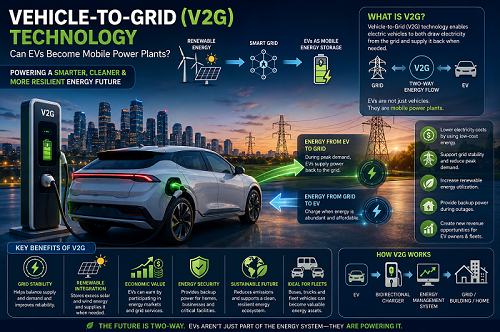
The rapid growth of electric vehicles is transforming transportation worldwide. However, the future of electric mobility may involve much more than simply replacing conventional fuel-powered vehicles. A new concept known as: Vehicle-to-Grid (V2G) is gaining attention as one of the most promising innovations in the evolving energy ecosystem. Traditionally, vehicles consume energy from the electrical grid. V2G technology introduces a new possibility: Electric vehicles can both consume and supply electricity. This transforms EVs from transportation assets into mobile energy storage systems capable of supporting: Electrical grids, Renewable energy integration, Emergency power supply and Energy management systems. As EV adoption accelerates globally, V2G could become a critical component of future smart energy networks. What Is Vehicle-to-Grid (V2G)? Vehicle-to-Grid technology enables a two-way flow of electricity between an electric vehicle and the power grid. In conventional charging: Grid → EV Battery, With V2G: Grid ↔ EV Battery & EV Battery ↔ Grid. This means EV batteries can: Charge when electricity is abundant, Store energy temporarily and Return electricity when demand increases. The vehicle effectively becomes a mobile energy storage unit. How V2G Works ? A V2G-enabled system typically requires: 1. Bidirectional Charger- Unlike conventional chargers, bidirectional chargers allow electricity to flow in both directions. They can: Charge the vehicle battery and Export stored electricity back to the grid. 2. Smart Energy Management System- Software continuously monitors: Grid demand, Electricity prices, Battery state of charge and Charging schedules. The system decides when: Charging is optimal and Energy export is beneficial. 3. V2G-Compatible Vehicle- Not all EVs currently support bidirectional charging. Future EV platforms are increasingly being designed with V2G capability in mind. Why V2G Matters- One of the biggest challenges facing modern power systems is balancing electricity supply and demand. The simplified relationship is: Power generation = Power demand When demand suddenly increases, utilities must quickly provide additional power. Traditionally, this has required: Peaking power plants, Expensive reserve capacity and Grid infrastructure upgrades. V2G introduces an alternative solution: Millions of EV batteries can collectively act as distributed energy storage resources. Supporting Renewable Energy Integration- Renewable energy sources such as: Solar power and Wind power are inherently variable. Solar generation decreases after sunset. Wind generation fluctuates depending on weather conditions. V2G can help address these challenges by: Storing excess renewable energy, Returning electricity during shortages and Stabilizing renewable-powered grids. This improves overall renewable energy utilization and reduces energy waste. Commercial Fleets Could Become Energy Assets- Commercial fleets may become some of the most valuable V2G participants. Examples include: Electric bus fleets, Logistics fleets, Delivery vehicles and Municipal vehicle fleets. These vehicles often spend significant time parked between operations. During these periods, batteries can potentially support: Grid stabilization, Peak demand management, Energy trading and Emergency power support. A large electric bus depot could effectively function as a distributed energy storage facility. Reducing Peak Electricity Demand- Electric utilities often face challenges during: Evening demand peaks, Heatwaves and Industrial load spikes. V2G can help reduce pressure during these periods. Instead of building additional generation capacity, utilities may draw limited energy from connected EVs. This approach can help: Improve grid stability, Reduce infrastructure investment, Lower operating costs and Improve energy resilience. Emergency Backup Power Applications- V2G technology can also support: Vehicle-to-Home (V2H) and Vehicle-to-Building (V2B) applications. In these scenarios, EV batteries provide electricity to: Homes, Offices, Commercial facilities and Critical infrastructure during power outages. This capability may become increasingly valuable in regions experiencing: Grid instability, Extreme weather events and Natural disasters. Economic Benefits for EV Owners- V2G could create new revenue opportunities. Vehicle owners may potentially earn income by: Selling electricity back to utilities, Participating in energy markets and Supporting grid balancing services. The concept is similar to: "Parking your vehicle while it earns money." Future energy markets may compensate EV owners for providing: Storage capacity, Demand response services and Grid support functions. Challenges Facing V2G Adoption- Despite its potential, V2G still faces several challenges. Battery Degradation Concerns, Additional charge-discharge cycles may contribute to: Battery wear, Capacity loss and Accelerated aging. However, ongoing research suggests that properly managed V2G operation may have a relatively limited impact on battery life. Infrastructure Requirements- V2G deployment requires: Bidirectional chargers, Smart grid systems, Utility integration and Advanced software platforms. Infrastructure costs remain a significant barrier in many regions. Regulatory Challenges- Many electricity markets are not yet structured to support: Distributed energy resources, Vehicle energy trading and Consumer participation in grid services. Policy and regulatory frameworks will need to evolve. V2G and Developing Countries- Developing countries may benefit significantly from V2G in the future. Potential advantages include: Improved grid reliability, Reduced infrastructure investment, Better renewable energy utilization and Enhanced energy resilience. However, successful implementation will depend on: Grid modernization, Smart charging infrastructure, Technical expertise and Regulatory support. For countries experiencing frequent power shortages, V2G could eventually become an important energy management tool. The Future of V2G- Industry experts increasingly view EVs as: Batteries on Wheels, rather than simply transportation devices. Future smart cities may integrate: Electric vehicles, Renewable energy, Battery storage systems, Smart charging networks and AI-driven energy management into a single connected ecosystem. In such systems, EVs may play an active role in maintaining energy stability rather than simply consuming electricity. Could V2G Replace Large Energy Storage Systems?- Probably not entirely. Large Battery Energy Storage Systems (BESS) will continue playing a critical role in grid management. However, V2G can complement stationary storage by providing: Flexible distributed capacity, Additional grid support, Improved renewable integration and Enhanced system resilience. The combination of BESS and V2G may become one of the most powerful energy management strategies of the coming decades. Final Thoughts- Vehicle-to-Grid technology represents one of the most exciting developments at the intersection of transportation and energy. By enabling electric vehicles to: Store electricity, Support renewable energy, Stabilize grids and Provide backup power. V2G transforms EVs into active participants in the energy ecosystem. While challenges related to infrastructure, regulation, and battery management still remain, the long-term potential is enormous. The future of electric mobility may not be limited to moving people and goods. It may also involve helping power homes, businesses, and entire electrical grids. In the coming years, Vehicle-to-Grid technology could redefine what it truly means to own and operate an electric vehicle. Thanks
My post content
Connect
Get in touch for sustainable transport solutions.
Head of Operations (Australia): Mr. Tauqeer Banoori
© 2025. All rights reserved.
Contact: +61 415 605 202